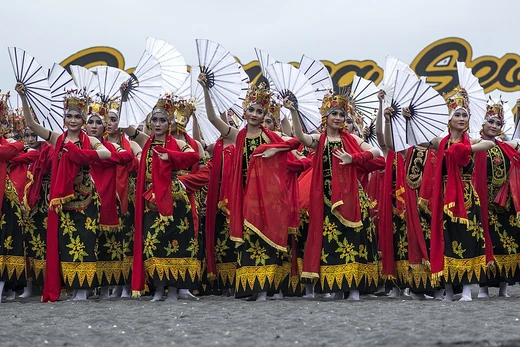
Circumambulation
Ritual walking around a sacred object or idol.

Wikipedia / Wikimedia Commons
Circumambulation is the act of moving around a sacred object or idol, derived from Latin 'circum' (around) and 'ambulātus' (to walk). It is an integral part of Hindu and Buddhist devotional practice, known in Sanskrit as pradakśiṇā, and is also present in other religions including Christianity, Judaism, and Islam.
- Etymology
- Latin circum (around) + ambulātus (to walk)
- Sanskrit term
- pradakśiṇā
- Hindu direction
- clockwise
- Islamic direction
- counter-clockwise
- Buddhist direction
- clockwise
- Common number in Christianity
- three times
- Islamic number
- seven times
Lore & Background
In Hindu temples, worshipers move in a clockwise direction through ambulatory halls toward the inner sanctum, symbolizing spiritual transition. The pathway is called the Pradakshina path, and circumambulation is done in an odd number of times. In Buddhism, circumambulation (pradakṣina or caṅkramaṇa) is performed around stupas containing relics, and in Pure Land Buddhism it is combined with recitation of Amitābha Buddha's name, systematized by Zhiyi in the constantly walking samādhi.
Reader's Guide
Circumambulation serves as an embodied form of reverence across multiple religious traditions. In Hinduism and Buddhism, the clockwise direction symbolizes conformity to cosmic order, while in Islam, counter-clockwise circumambulation of the Kaaba demonstrates unity of believers. In Christianity, it appears in Catholic incensing of altars, Eastern rites, and Lenten Stations of the Cross. Judaism uses it in Hakafot rituals and wedding ceremonies. The practice integrates bodily movement with devotional intention, whether for merit-making, purification, or spiritual transition.
Did You Know?
- In Hindu practice, circumambulation is done in an odd rather than even number of times.
- In Pure Land Buddhism, practitioners may circumambulate an image of Amitābha for up to ninety days without sitting or lying down.
- In the Tridentine Rite, the elements of Bread and Wine are incensed twice counterclockwise and once clockwise.
- In Judaism, someone who had something bad happen would circumambulate clockwise on the Temple Mount to signal their need for prayer.
More in Ritual 1-24
Spotted an error? Know more?
This is a living reference — every entry is fact-audited, and reader corrections feed straight into our audit queue. Suggest an edit · See this site's audit record