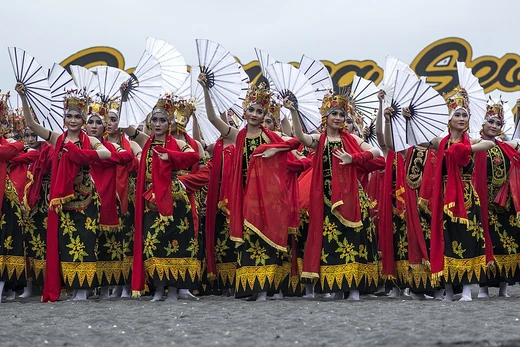
Pas-ta'ai
Biannual Saisiyat ritual commemorating the short Ta'ai people.
Pas-ta'ai (Chinese: 矮靈祭; pinyin: Ǎilíngjì), meaning "Ritual to the Spirits of the Short [People]," is a ceremony of the Saisiyat, an Indigenous group in Taiwan. It honors the Ta'ai, a legendary tribe of short, dark-skinned people who are said to have once lived nearby. The ritual takes place every two years, and all Saisiyat are expected to take part.
The Saisiyat believe this practice has been carried out for about 400 years. Originally held annually during the harvest season, it was first documented in 1915 by Japanese colonial researchers in their *Surveys of the Customs of Barbarian Tribes*. Under Japanese rule, the ceremony was reduced to a biannual event. According to anthropologist and filmmaker Hu Tai-li of Academia Sinica's Institute of Ethnology, the tradition had faded so much that only elderly Saisiyat could perform it. Over the past two decades, however, it has been revived, driven by the broader Aboriginal Taiwanese movement and growing interest from outsiders. Pas-ta'ai was officially recognized as Taiwan's Cultural Heritage in 2009 and 2010. Over time, external factors have harmed the ritual, including improper government intervention, biased media coverage, disrespectful tourism, and increased waste.
Several versions of the legend exist. In one, the short people—dark-skinned, under a meter tall, and living across the river—were skilled singers and dancers. They were invited to Saisiyat harvest festivals, creating a long, mutually beneficial relationship. But the short people were lustful and often made advances toward Saisiyat women. In revenge, some young Saisiyat cut the sturdy tree where the short people rested. All but two elders fell from a cliff and died. Those two survivors taught the Saisiyat the songs and dances of Pas-ta'ai, then left for the east. Soon after, the Saisiyat suffered famine, which they blamed on vengeful spirits of the short people. To appease them, they began holding Pas-ta'ai and begging forgiveness. The Saisiyat were also instructed to be hardworking, fair, honest, and tolerant. In another version, the two elders cursed the Saisiyat, who pleaded for mercy. The elders agreed only if the Saisiyat performed the short people's dances to soothe the dead spirits; otherwise, their crops would fail. The legends also say the short people had magical abilities and brought good fortune if treated respectfully.
The ceremon
- Type
- Ritual
- People
- Saisiyat (Taiwanese aboriginal group)
- Frequency
- Every two years
- First recorded
- 1915
- Duration
- Three days and nights
- Designation
- Taiwan's Cultural Heritage (2009, 2010)
Lore & Background
The Pas-ta'ai ritual is purported to have been practiced for 400 years and was initially practiced every year during the harvest season. It was first recorded in 1915 in the Surveys of the Customs of Barbarian Tribes by researchers operating under the colonial Japanese government. Under Japanese rule, the frequency was reduced to once every two years. According to anthropologist and filmmaker Hu Tai-li, from the Institute of Ethnology at Academia Sinica, the tradition had died down to the point to where it was largely only the elders of the Saisiyat who could practice the rituals; over the last 20 years, however, the tradition has been revitalized in the scope of the larger Aboriginal Taiwanese movement as well as through increasing outsider interest. The Pas-ta'ai ceremonies were officially designated as Taiwan's Cultural Heritage in 2009 and 2010 respectively. Over the years, certain external forces have had negative repercussions on the ritual, including improper intervention on the part of government administrative sectors, biased media coverage, improper tourist behaviour, and the proliferation of waste.
Reader's Guide
The Pas-ta'ai ritual holds deep cultural and historical significance for the Saisiyat people, serving as a means of appeasing the spirits of the Ta'ai, a short dark-skinned tribe. According to legend, the Ta'ai were skilled in song and dance but were lascivious toward Saisiyat women, leading to their deaths after Saisiyat men cut a tree they rested on. Two surviving elders taught the Saisiyat the songs and dances of the ritual before departing. The Saisiyat then began holding Pas-ta'ai to beg forgiveness and avoid famine. The ceremony, traditionally the responsibility of the Saisiyat Titiyon family, is held over three days and nights during the full moon of the 10th lunar month, with complex phases including welcoming, treating, entertaining, chasing, and sending off the spirits. The ritual has been revitalized in recent decades amid the Aboriginal Taiwanese movement and outsider interest, though it faces challenges from government intervention, media bias, tourism, and waste. The origins of the Ta'ai remain uncertain, with theories linking them to Negritos or African slaves, but no scholarly consensus exists.
Did You Know?
- The ritual was first recorded in 1915 by Japanese colonial researchers.
- The ceremony is held biannually, with the first ritual in a 10-year period being larger.
- Traditional costumes include bells to enable connection to the spirit world.
- The ritual was designated Taiwan's Cultural Heritage in 2009 and 2010.
More in Ritual 1-24
Spotted an error? Know more?
This is a living reference — every entry is fact-audited, and reader corrections feed straight into our audit queue. Suggest an edit · See this site's audit record